Hero status and skill tracking
A running account of character levels, skills, equipment and progression helps establish what is supposed to remain consistent.
Explore the functions that matter most to fiction authors, plus the limitations worth checking before buying.
Independent product guide. We are not the maker of LitRPG AI. Product details and prices were supplied for the October 2026 launch and may change.
LitRPG creates a unique editorial headache: equipment, class abilities and numerical progression are all visible to the reader. A convincing world cannot have a character spend gold they never earned or use a skill they never unlocked.
LitRPG AI attempts to solve that with structured notes and consistency checks alongside manuscript generation.
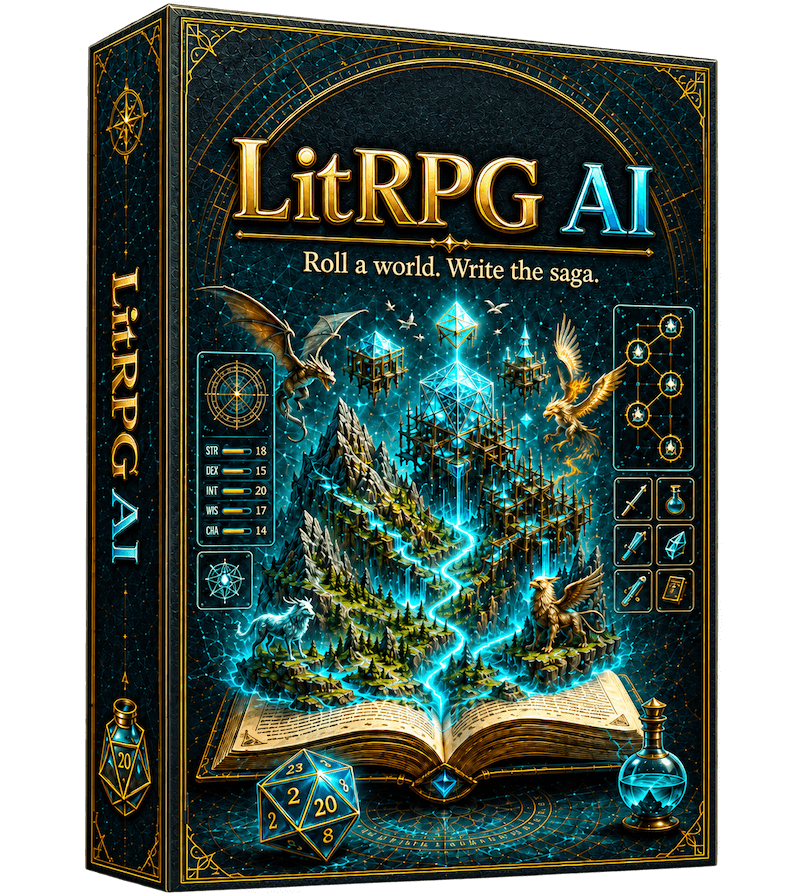
A running account of character levels, skills, equipment and progression helps establish what is supposed to remain consistent.
The vendor describes automated checks for stat inconsistencies and story repetition. Treat flags as editing help, not proof that a manuscript is error-free.
Keep world rules, relationships, history and fixed facts in one place so later chapters have a more stable foundation.
Choose from dungeon stories, settlements, crafting, monster evolution and other LitRPG subgenres; adjust the mood from cozy to dark.
Review plans before generating text and revise existing material without starting an entirely new project.
Start a sequel with major unresolved threads and recorded character developments carried forward.
Cover tools, listing copy and KDP-style exports help assemble a publishing package.
The supplied launch description lists up to three pen names and a hosted author page for each.
The supplied offer describes single-payment packages with credits; generation and optional publishing steps consume credits in different amounts.